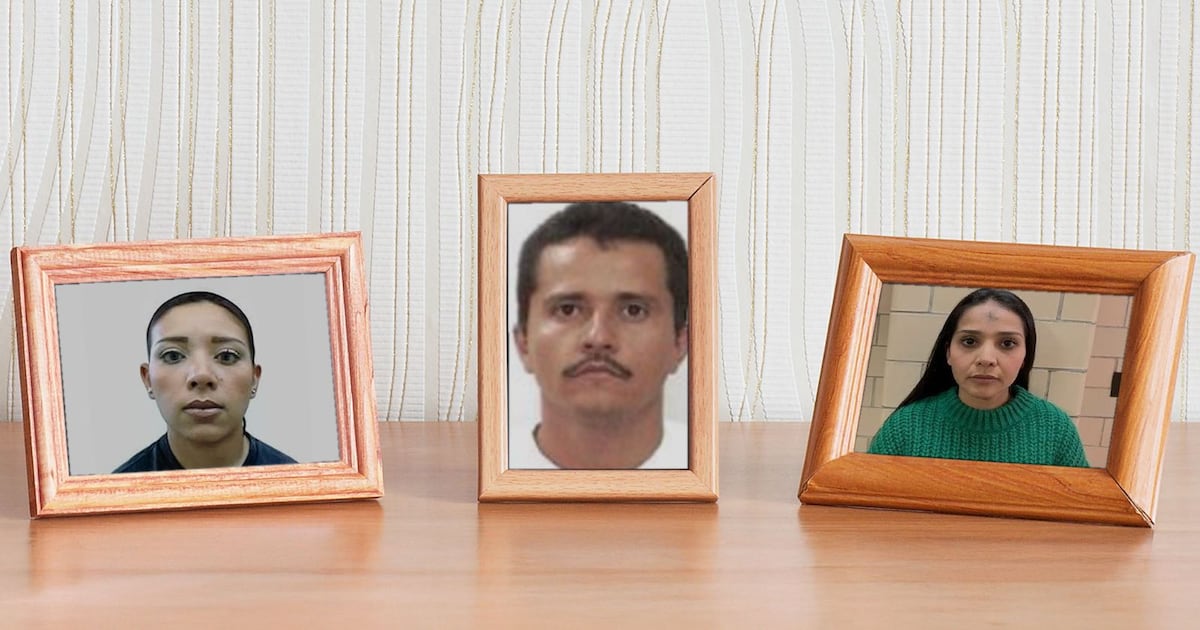
The Enigmatic Daughters of El Mencho: A Legacy of Power and Controversy
In the ruthless world of Mexican organized crime, few names command as much fear and notoriety as Nemesio Oseguera Cervantes, better known as “El Mencho,” the elusive leader of the Cártel Jalisco Nueva Generación (CJNG). While much attention has focused on his formidable empire and the violent reach of his cartel, the lives of his daughters, Laisha and Jessica Oseguera, offer a unique and compelling insight into the intricate, often shadowed dynamics of a criminal dynasty. Unlike their brother and mother, both of whom are currently incarcerated, Laisha and Jessica have managed to remain free, a fact that raises questions about their influence, protection, and the true extent of their involvement within one of the world's most dangerous criminal organizations. The very mention of El Mencho's Daughters: Free, Linked to CJNG & Crime immediately conjures images of power, privilege, and perplexing legal leniency, making their stories particularly intriguing.
Born into a life of infamy, these young women are not merely bystanders to their father’s empire. Both have been directly linked to various criminal enterprises, including money laundering and other illicit operations tied to the CJNG. Their mother, Rosalinda González Valencia, often referred to as ‘La Jefa’ and a niece of the founder of Los Cuinis (a group closely allied with the CJNG), was identified as a financial operator for the criminal organization, highlighting the deep familial roots of the cartel’s operations. El Mencho himself started his journey from humble beginnings as an avocado field caretaker, eventually rising to establish a cartel that rivals any in its brutal efficiency and vast reach. The Oseguera family, therefore, represents a lineage deeply intertwined with the fabric of Mexico's criminal underworld, with each member playing a distinct, albeit often clandestine, role.
Jessica Oseguera: 'La Negra' and the Battle Against Financial Chains
Jessica Johanna Oseguera González, known also by the alias ‘La Negra’, represents a pivotal figure within the narrative of El Mencho’s family and the CJNG's financial operations. Born in the United States, her American citizenship has, at various times, introduced complex legal dimensions to her situation. Her most significant encounter with the law came in 2020 when she was arrested on charges of money laundering. These charges stemmed from allegations that she owned, controlled, or managed businesses that provided material support to the CJNG, including restaurants, tequila companies, and real estate firms that were designated by the U.S. Treasury Department for their ties to the cartel.
Following her arrest, Jessica spent over two years in prison. In 2022, after serving her sentence, which included a plea agreement, she was released. During her legal proceedings, she reportedly expressed remorse for her actions and pleaded for the unfreezing of her bank accounts, in addition to paying a $20,000 fine. While her release marked a temporary end to her direct incarceration, the broader implications of her involvement continue to resonate. Money laundering is the lifeblood of any large-scale criminal enterprise, allowing illicit profits to be integrated into the legitimate financial system, thereby funding further operations and entrenching the cartel's power. Jessica's alleged role in this crucial aspect suggests a sophisticated understanding of financial mechanisms and a direct contribution to the CJNG's economic stability.
Despite her past conviction and subsequent freedom, speculation continues regarding her potential future within the CJNG. With her brother, Rubén "El Menchito" Oseguera, serving a life sentence in the formidable ADX Florence prison alongside Joaquín 'El Chapo' Guzmán, and her mother also detained, Jessica's position as a free and experienced individual within the family is unique. Her U.S. ties and financial acumen could make her an invaluable asset, or even a contender for a more prominent leadership role, especially in the cartel’s increasingly globalized and complex financial networks. This raises critical questions about CJNG Leadership: Is Jessica Oseguera Next for El Mencho's Cartel? The targeting of financial networks is a cornerstone of law enforcement efforts against cartels, making individuals with expertise in this area both highly valuable to the cartels and highly vulnerable to prosecution. Her story serves as a stark reminder of the sophisticated financial infrastructure that underpins major drug trafficking organizations.
Laisha Oseguera: From University Dreams to Allegations of Cartel Involvement
Laisha Michelle Oseguera González, the younger daughter of El Mencho and Rosalinda González Valencia, initially maintained a lower profile compared to her sister. Born in 2001, her name first entered the broader public consciousness not through direct criminal charges, but through a series of dramatic events that quickly pulled her into the cartel's orbit. Her presence reportedly at a lavish funeral for El Mencho in Guadalajara, where she was seen among attendees and allegedly claimed her father's remains, thrust her into the media spotlight, hinting at a direct, albeit solemn, connection to the cartel's inner circle.
Prior to these public appearances, Laisha's aspirations seemed to lean towards a legitimate career path. In 2021, when advocating for her sister Jessica's clemency in a U.S. court, Laisha described herself as a university student pursuing a degree in Business Administration and Entrepreneurship. In the same letter, she affectionately referred to Jessica as her "second mother," highlighting a deep familial bond. This image of an aspiring businesswoman stands in stark contrast to the subsequent allegations that have since surfaced, painting a much darker picture of her involvement.
Perhaps the most disturbing allegation against Laisha emerged in the same year, linking her to the kidnapping of two Mexican marines in Zapopan. This retaliatory act was reportedly carried out in response to the arrest of her mother, Rosalinda González Valencia. This incident marked a significant shift in how authorities viewed Laisha, moving her from a peripheral family member to an alleged active participant in violent cartel operations. Following this episode, both Mexican and U.S. authorities reportedly began including her name in judicial investigations pertaining to money laundering and other illicit activities connected to the CJNG. The contrast between her stated academic ambitions and her alleged engagement in such brutal acts underscores the immense pressure and pervasive influence of family ties within organized crime, making it incredibly difficult for individuals like El Mencho's Daughters: Free, Linked to CJNG & Crime to forge independent lives away from the cartel's shadow.
The Oseguera Sisters' Role in the CJNG: Beyond Bloodlines
The divergent paths and alleged involvements of Jessica and Laisha Oseguera provide a compelling glimpse into the evolving roles of family members, particularly women, within powerful criminal organizations like the CJNG. Jessica, with her background and legal entanglements centered around financial crimes, appears to have operated within the cartel's sophisticated economic framework. Her alleged expertise in money laundering would have been crucial for integrating illicit profits into the legitimate economy, thus sustaining the cartel's vast operations and insulating its leadership. This role, while less overtly violent, is undeniably foundational to the CJNG's endurance and global reach.
Laisha, on the other hand, through allegations such as the marine kidnapping, seems to have been drawn into more direct and violent forms of cartel retaliation. This stark contrast illustrates the multifaceted contributions required to maintain a cartel's power, from the boardroom-like dealings of financial schemes to the brute force tactics of intimidation and reprisal. Both roles, however, are inherently dangerous and place the individuals at constant risk of legal action and rival cartel aggression.
The Oseguera sisters' situations highlight a significant trend in Mexican organized crime: the increasing visibility and operational involvement of women. Often, these roles are born out of familial loyalty and the intricate web of kinship that defines cartel structures. Daughters, wives, and sisters frequently take on responsibilities in logistics, communications, financial management, and sometimes even direct operational command, especially when male leaders are incarcerated or killed. Their "freedom," while a notable point, is relative. It often means operating under intense scrutiny from law enforcement and constantly navigating the treacherous landscape of their family's criminal enterprise. For anyone connected to such a powerful figure, particularly El Mencho's Daughters: Free, Linked to CJNG & Crime, true freedom from the cartel's shadow is arguably an illusion.
Practical Tip: Understanding the depth of family loyalty in criminal organizations is crucial for law enforcement. Disrupting these family networks, not just individual leaders, can have a more profound impact on a cartel's long-term viability. These organizations leverage inherent trust and existing social bonds, making them incredibly resilient. Fact: While often sensationalized, the increasing presence of women in cartel operations is a well-documented phenomenon, driven by necessity and the strategic advantage of using less-suspected individuals for crucial tasks.
The Future of El Mencho's Dynasty: A Shifting Landscape
The question of succession and the future leadership of the CJNG remains one of the most pressing and uncertain aspects of Mexico's organized crime landscape. With El Mencho's son, Rubén 'El Menchito', serving a life sentence, and his wife, Rosalinda, also in custody, the direct line of succession appears significantly disrupted. This scenario inevitably casts a spotlight on Laisha and Jessica Oseguera. Could either of these women, particularly Jessica with her alleged financial acumen and history of managing cartel assets, step into a more prominent leadership role within the CJNG? The possibility is not far-fetched, given the precedent of women assuming control in other cartels and the strategic advantage of having a leader who is currently free.
However, assuming leadership of a cartel as brutal and extensive as the CJNG comes with immense challenges. Internal power struggles are endemic, rival cartels are relentless in their pursuit of dominance, and international law enforcement agencies continually intensify their efforts. Any individual stepping into El Mencho's shoes would face immediate and severe threats from multiple directions. For CJNG Leadership: Is Jessica Oseguera Next for El Mencho's Cartel? it would mean navigating a volatile environment where trust is scarce and betrayal is common.
The symbolic power of "La Hija Del Mencho" is considerable. It carries the weight of a fearsome legacy and potentially offers a degree of legitimacy or respect within certain criminal circles. However, it also makes them prime targets. The ongoing efforts of both Mexican and U.S. authorities to dismantle the CJNG's command structure and financial networks mean that anyone associated with its leadership faces relentless pursuit. The future of El Mencho's dynasty, therefore, is not just about who might lead the CJNG, but about the very sustainability of such a family-centric criminal enterprise in the face of concerted opposition.
In conclusion, the lives of Laisha and Jessica Oseguera are a testament to the complex and often inescapable nature of familial ties within high-stakes organized crime. As the daughters of one of the world's most feared drug lords, their unique status as free members of the Oseguera family, despite significant alleged links to the CJNG's operations, continues to intrigue and perplex. While Jessica has navigated the U.S. legal system for money laundering and Laisha has been linked to more direct, violent cartel actions, their ultimate influence and future roles within the Jalisco New Generation Cartel remain subject to ongoing speculation and intense scrutiny. Their stories offer a compelling, albeit troubling, chapter in the enduring saga of El Mencho's formidable empire and the shifting landscape of Mexican organized crime.